


How to optimize the extrusion pressure control accuracy when dealing with sealants of different viscosities using an extrusion sealant tool (caulking gun)?
Release Time : 2026-02-11
The extrusion sealant tool (caulking gun), as a core tool for sealant application, directly affects the filling effect and application quality of the sealant due to the precision of its extrusion pressure control. For sealants of varying viscosities, optimization is needed from multiple dimensions, including tool structure, operating techniques, auxiliary design, and maintenance, to ensure accurate and stable pressure control.
The piston and cylinder design of the caulking gun are fundamental to pressure control. High-viscosity sealants (such as silicone sealants) have poor flowability, requiring increased piston diameter or optimized sealing ring material to enhance thrust transmission efficiency. For example, using wear-resistant rubber sealing rings reduces frictional loss during piston movement, preventing pressure drop due to poor sealing; while low-viscosity sealants (such as polyurethane sealants) require a smaller piston gap to prevent backflow caused by excessively thin adhesive, ensuring continuous and stable pressure. Furthermore, polishing the inner wall of the cylinder reduces adhesive adhesion, allowing the piston thrust to act more directly on the adhesive, improving pressure transmission efficiency.
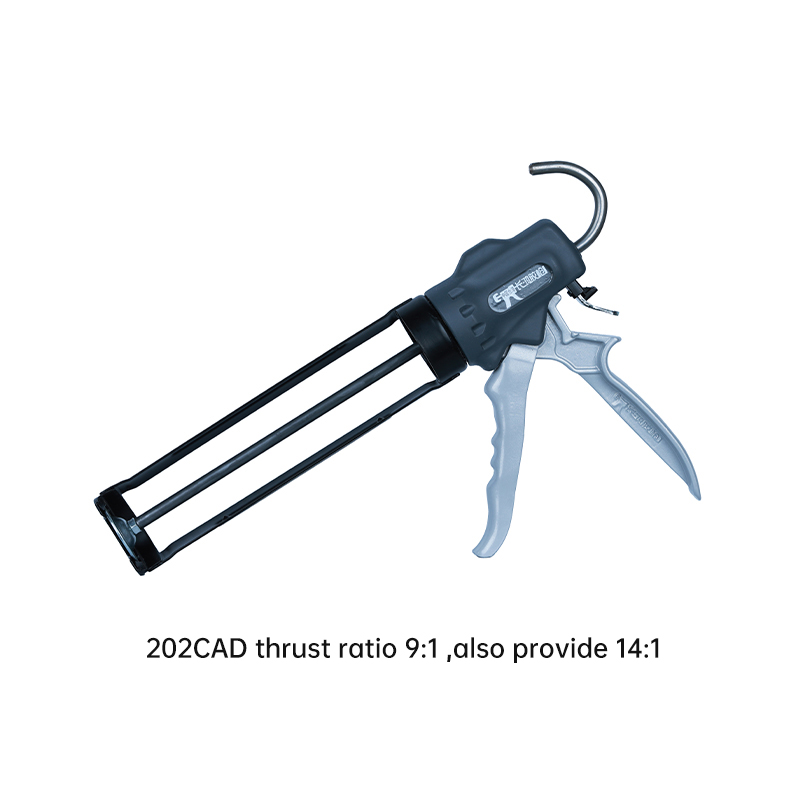
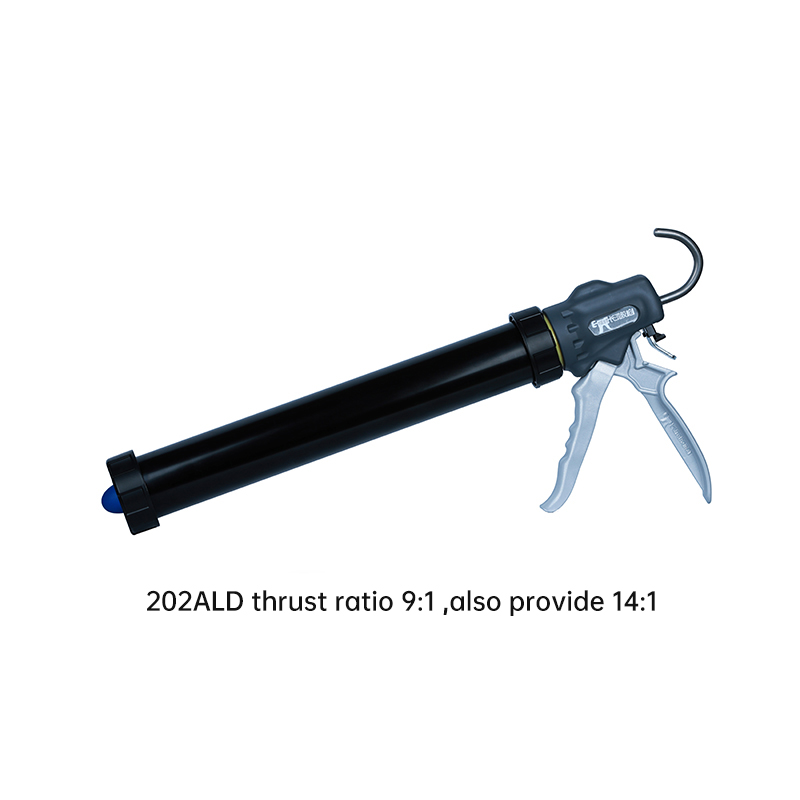
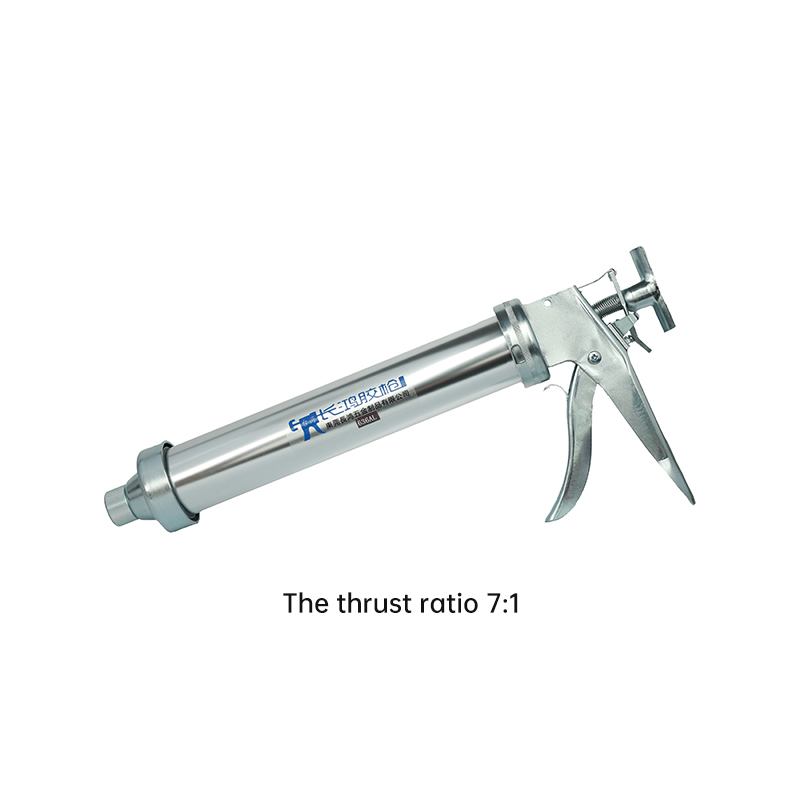
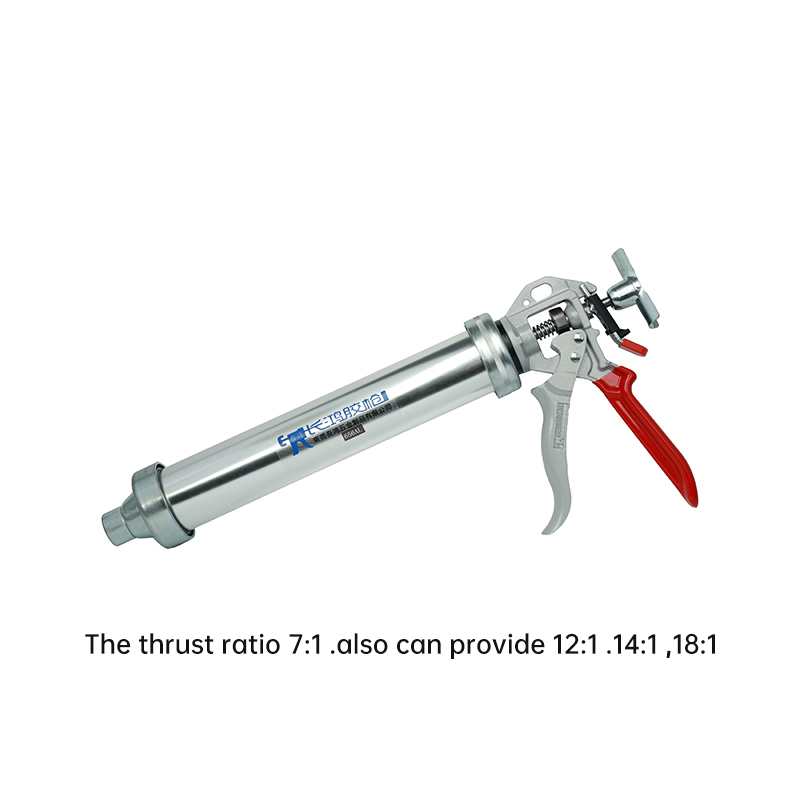
The trigger mechanism design directly affects the sensitivity of pressure control. Traditional sealant guns often use a rigid connection between the trigger and the push rod, requiring significant force during operation and prone to pressure fluctuations due to uneven force application. Optimized trigger mechanisms, by increasing the leverage ratio or introducing a spring buffer, achieve linear pressure output. For example, an 18:1 trigger ratio design amplifies the operating force by 18 times, making the extrusion of high-viscosity adhesives easier; while the spring buffer automatically rebounds the push rod upon trigger release, preventing the adhesive from continuing to flow due to residual pressure and improving control precision.
The shape and size of the nozzle need to be flexibly adjusted according to the sealant viscosity and joint width. High-viscosity adhesives require a tapered nozzle, whose narrow outlet reduces the adhesive viscosity through shear force, making extrusion smoother; while low-viscosity adhesives are suitable for a round nozzle, avoiding excessively fast flow rates and difficulty in control due to an overly narrow outlet. Furthermore, the nozzle length must match the joint depth; too short a nozzle may result in insufficient adhesive filling, while too long a nozzle may affect extrusion performance due to pressure dispersion. Some high-end caulking guns also offer interchangeable nozzle kits, allowing users to quickly switch according to their needs and improving application flexibility.
The impact of operating techniques on pressure control cannot be ignored. When extruding high-viscosity caulking compound, the trigger should be pressed at a constant speed to avoid intermittent or swollen dispensing due to sudden changes in force. Low-viscosity caulking compound, on the other hand, requires rapid pressing and immediate release to prevent contamination of the joint area due to excessive flow. Furthermore, the gun angle also needs adjustment—the nozzle should be held at a 45° angle to the bottom of the joint to ensure the caulking compound fully fills the bottom of the joint while preventing overflow due to excessive angle. Some experienced applicators also use a "pre-pressing" technique, where the trigger is first lightly pressed to allow the caulking compound to contact the joint, and then pressure is gradually increased for more precise pressure control.
Auxiliary design features such as pressure regulating valves and anti-drip devices can further improve control accuracy. The pressure regulating valve, adjusted by rotating the valve body to regulate spring tension, limits the maximum extrusion pressure, preventing excessive caulking due to operational errors. The anti-drip device automatically seals the nozzle when the trigger is released, preventing further caulking due to gravity, especially suitable for low-viscosity caulking guns. Some electric caulking guns are equipped with a digital pressure display, allowing real-time monitoring and adjustment of the extrusion pressure, maintaining accuracy within ±5%. However, similar results with the extrusion sealant tool (caulking gun) can be achieved through experience.
Maintenance is crucial for ensuring stable pressure control. After use, the cylinder and piston must be cleaned immediately to prevent caulking from hardening and obstructing piston movement. The nozzle should be soaked in a special cleaning agent to prevent residual caulking from clogging the outlet. The sealing ring should be lubricated regularly to reduce friction wear. For long-term storage, the caulking gun should be placed in a dry environment to prevent rust on metal parts, which could affect pressure transmission efficiency.
By optimizing tool structure, adjusting operating techniques, introducing auxiliary designs, and strengthening maintenance, the extrusion sealant tool (caulking gun) can achieve precise pressure control for sealants of varying viscosities. Whether it's the stable extrusion of high-viscosity colloids or the fine filling of low-viscosity colloids, both can meet the construction requirements through systematic optimization, providing a reliable guarantee for the quality of sealing projects.