


How does the caulking gun use mechanical ingenuity to reshape the precision and aesthetics of architectural sealing?
Release Time : 2026-06-22
In the huge industrial systems of modern architectural decoration, electronic and electrical assembly, and automobile and shipbuilding, sealing and caulking are key links to ensure structural safety, waterproofing and moisture-proofing, and to enhance appearance aesthetics. Whether it’s the gaps between bathroom tiles, the seams around the edges of doors and windows, or the bonding of precision electronic components, liquid sealing materials need to be injected precisely into specific grooves or joints. In this process, the caulking gun, as a mechanical extrusion device specially designed for barrel sealants, has completely changed the traditional extensive mode of manual application with its unique piston extrusion structure, sublimating the sealing operation from a simple manual labor to a process that combines precision and aesthetics.
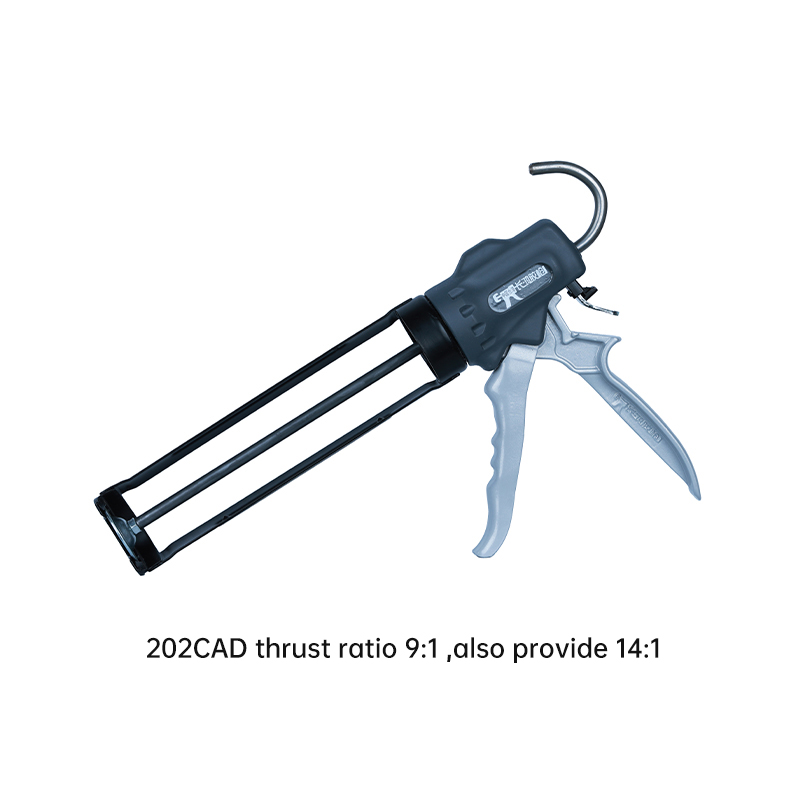
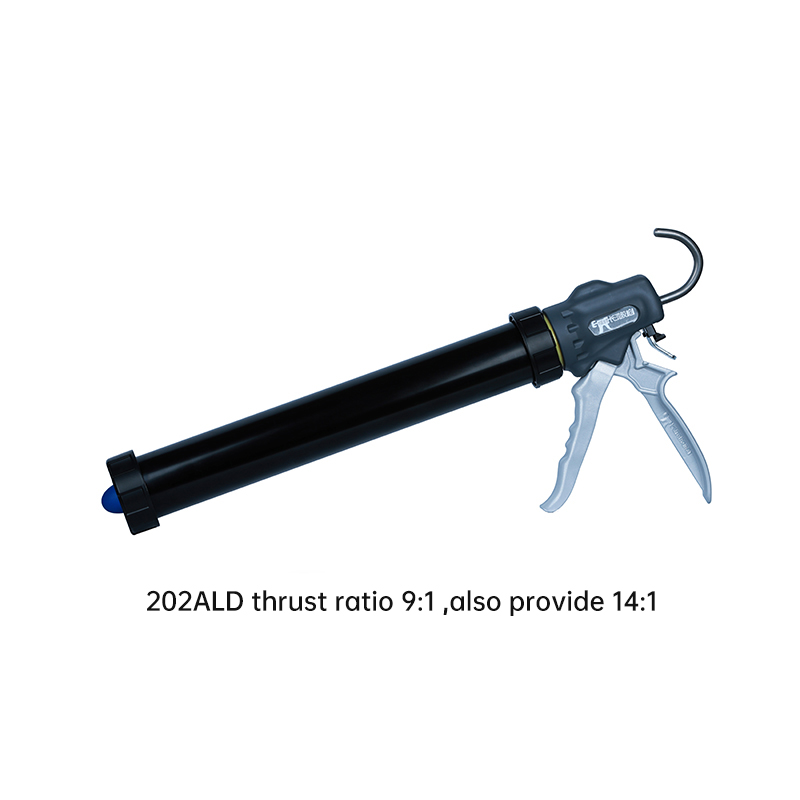
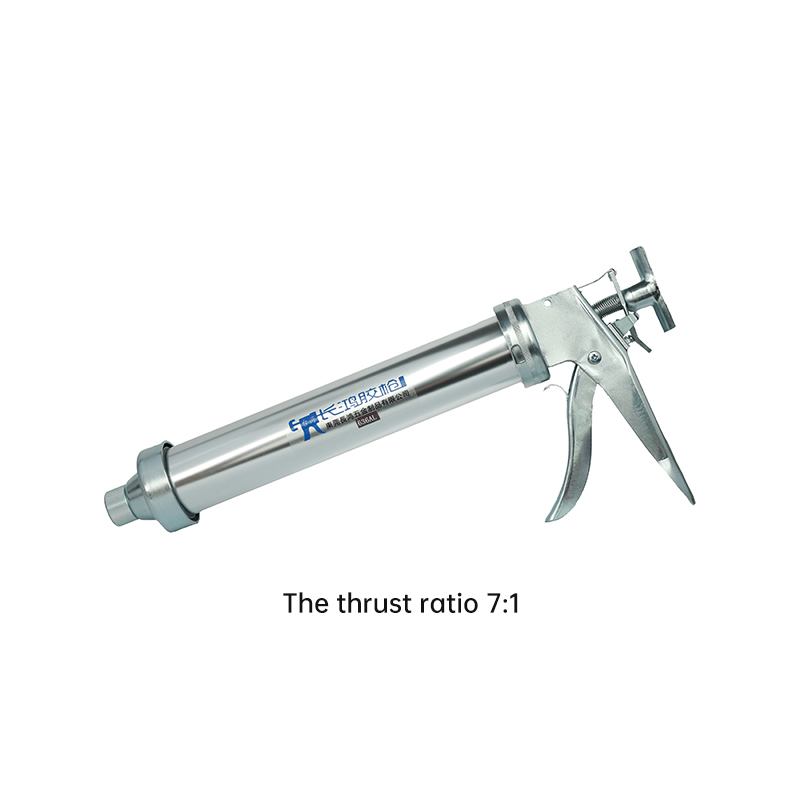
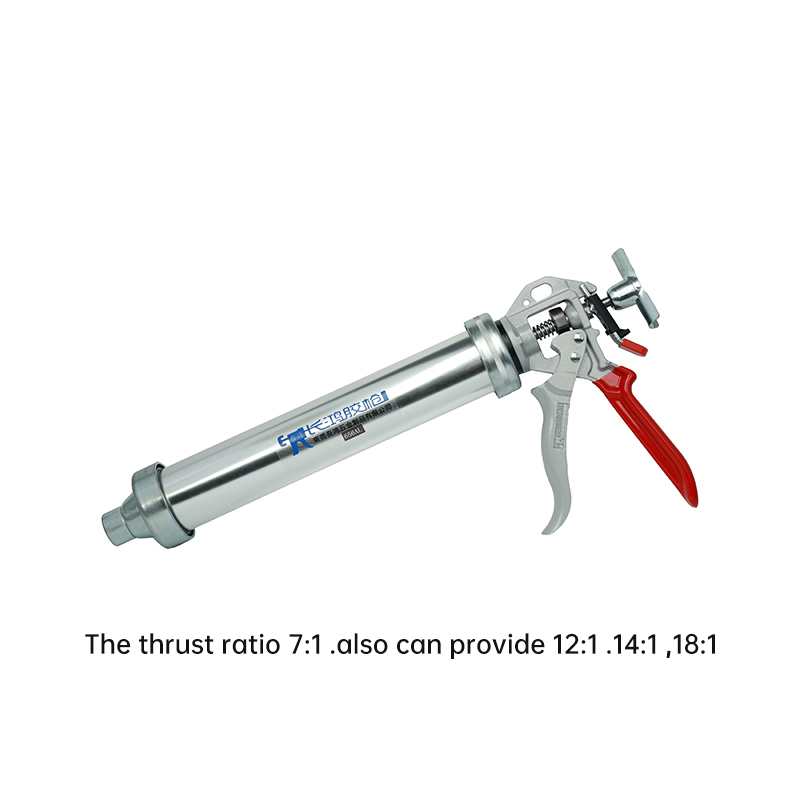
The core operating mechanism of the caulking gun is based on exquisite mechanical mechanics principles. Its main structure usually consists of a semicircular gun body, a push rod that drives the piston, and a plate switch (trigger) that controls glue dispensing. When the simple or barrel-type liquid sealing material is placed behind the gun, the user turns the pressure exerted by the hand into a mechanical thrust forward of the push rod by pulling the plate switch. The piston disc at the end of the push rod is tightly attached to the bottom of the glue barrel, forcing the viscous glue to flow out smoothly from the nozzle with uniform and continuous squeezing force. This mechanical transmission design not only greatly reduces the user's physical exertion, but more importantly, it gives the operator absolute control over the glue output and flow rate, allowing the originally unmanageable viscous sealant to be injected into the target gap as smoothly as silk.
With the continuous iteration of industrial manufacturing technology, caulking gun also shows extremely high professional segmentation and humanistic considerations in structural design. In order to adapt to the construction needs in different scenarios, caulking guns have developed various types such as ratchet type, smooth rod type, and electric type. The traditional ratcheting rod caulking gun relies on a toothed push rod to advance in a clicking manner. It has a simple structure and is affordable, suitable for occasional home repairs. The smooth rod (anti-drip) caulking gun, designed for the ultimate effect, uses a frictionless piston with an instant pressure release mechanism. This design ensures that when the trigger is released, the push rod can immediately stop advancing and cut off the flow of glue, which perfectly solves the problems of tailing and dripping that are prone to occur with traditional tools, leaving a clean glue strip at the seam. For professionals who need to handle large-scale projects or high-intensity operations, battery- or pneumatic-driven electric caulking guns can provide continuous and stable flow rates, taking construction efficiency to a new level.
In actual sealing operations, the excellent performance of the caulking gun often needs to be combined with scientific operating techniques to achieve maximum effectiveness. The professional construction process requires the user to fully retract the push rod before loading the rubber cartridge to ensure that the rubber cartridge can be firmly embedded in the gun frame. Before formal construction, the nozzle of the sealant needs to be accurately cut at an angle of about 45 degrees. The size of the hole needs to be fine-tuned according to the width of the gap and the internal aluminum foil sealing layer needs to be punctured. When extruding sealant, it is crucial to keep the angle between the gun tip and the surface constant and the rhythm of pressing the trigger to be smooth. This is just like a decorator extruding even cream on a cake, which requires patience and precise cooperation. After the strip is extruded, using wet fingers or a special smoothing tool for shaping will allow the sealant to blend perfectly with the substrate to form a smooth and beautiful sealing layer.
The application scenarios of caulking guns have long transcended a single field and have widely penetrated into various industries such as architectural decoration, automobile parts assembly, container manufacturing and even aerospace. It is not only a powerful assistant for home DIY enthusiasts to repair doors and windows and beautify baseboards, but also a precision tool to ensure the airtightness and waterproofness of products on industrial assembly lines. By selecting the appropriate type of sealant, such as waterproof and flexible silicone, paintable acrylic latex or highly weather-resistant polyurethane, and using the caulking gun's precise application, sealing challenges in various complex environments can be effectively met.
All in all, although the caulking gun seems to be a simple hardware tool, it actually embodies the wisdom of material mechanics and ergonomics. It uses a controllable mechanical extrusion method to make the originally chaotic sealing operation orderly. It not only improves the quality and durability of the project, but also demonstrates the modern industry's unremitting pursuit of precision and aesthetics in every detail. In the future construction and manufacturing fields, the caulking gun will continue to serve as an invisible link connecting materials and structures, silently guarding the safety and comfort of human living spaces.
The core operating mechanism of the caulking gun is based on exquisite mechanical mechanics principles. Its main structure usually consists of a semicircular gun body, a push rod that drives the piston, and a plate switch (trigger) that controls glue dispensing. When the simple or barrel-type liquid sealing material is placed behind the gun, the user turns the pressure exerted by the hand into a mechanical thrust forward of the push rod by pulling the plate switch. The piston disc at the end of the push rod is tightly attached to the bottom of the glue barrel, forcing the viscous glue to flow out smoothly from the nozzle with uniform and continuous squeezing force. This mechanical transmission design not only greatly reduces the user's physical exertion, but more importantly, it gives the operator absolute control over the glue output and flow rate, allowing the originally unmanageable viscous sealant to be injected into the target gap as smoothly as silk.
With the continuous iteration of industrial manufacturing technology, caulking gun also shows extremely high professional segmentation and humanistic considerations in structural design. In order to adapt to the construction needs in different scenarios, caulking guns have developed various types such as ratchet type, smooth rod type, and electric type. The traditional ratcheting rod caulking gun relies on a toothed push rod to advance in a clicking manner. It has a simple structure and is affordable, suitable for occasional home repairs. The smooth rod (anti-drip) caulking gun, designed for the ultimate effect, uses a frictionless piston with an instant pressure release mechanism. This design ensures that when the trigger is released, the push rod can immediately stop advancing and cut off the flow of glue, which perfectly solves the problems of tailing and dripping that are prone to occur with traditional tools, leaving a clean glue strip at the seam. For professionals who need to handle large-scale projects or high-intensity operations, battery- or pneumatic-driven electric caulking guns can provide continuous and stable flow rates, taking construction efficiency to a new level.
In actual sealing operations, the excellent performance of the caulking gun often needs to be combined with scientific operating techniques to achieve maximum effectiveness. The professional construction process requires the user to fully retract the push rod before loading the rubber cartridge to ensure that the rubber cartridge can be firmly embedded in the gun frame. Before formal construction, the nozzle of the sealant needs to be accurately cut at an angle of about 45 degrees. The size of the hole needs to be fine-tuned according to the width of the gap and the internal aluminum foil sealing layer needs to be punctured. When extruding sealant, it is crucial to keep the angle between the gun tip and the surface constant and the rhythm of pressing the trigger to be smooth. This is just like a decorator extruding even cream on a cake, which requires patience and precise cooperation. After the strip is extruded, using wet fingers or a special smoothing tool for shaping will allow the sealant to blend perfectly with the substrate to form a smooth and beautiful sealing layer.
The application scenarios of caulking guns have long transcended a single field and have widely penetrated into various industries such as architectural decoration, automobile parts assembly, container manufacturing and even aerospace. It is not only a powerful assistant for home DIY enthusiasts to repair doors and windows and beautify baseboards, but also a precision tool to ensure the airtightness and waterproofness of products on industrial assembly lines. By selecting the appropriate type of sealant, such as waterproof and flexible silicone, paintable acrylic latex or highly weather-resistant polyurethane, and using the caulking gun's precise application, sealing challenges in various complex environments can be effectively met.
All in all, although the caulking gun seems to be a simple hardware tool, it actually embodies the wisdom of material mechanics and ergonomics. It uses a controllable mechanical extrusion method to make the originally chaotic sealing operation orderly. It not only improves the quality and durability of the project, but also demonstrates the modern industry's unremitting pursuit of precision and aesthetics in every detail. In the future construction and manufacturing fields, the caulking gun will continue to serve as an invisible link connecting materials and structures, silently guarding the safety and comfort of human living spaces.