


How does a cartridge sealant tool ensure precise application?
Release Time : 2026-05-28
In the world of construction, home improvement, and industrial assembly, the quality of a seal is often judged by its visual finish as much as its functional durability. A cartridge sealant tool, commonly known as a caulking gun, serves as the fundamental bridge between raw material and a professional-grade application. While it may appear to be a simple mechanical device, the engineering behind a high-quality sealant tool is specifically designed to ensure precise application. Through controlled mechanical advantage, ergonomic design, and specialized nozzle geometry, these tools empower users to lay down exact, consistent beads of sealant while minimizing waste and mess.
The core mechanism that ensures precision in a cartridge sealant tool is its ability to regulate the flow rate of the viscous material inside. Unlike manual application with a spatula or finger, which relies entirely on human dexterity, a caulking gun utilizes a ratchet-driven plunger system. When the user squeezes the trigger, the ratchet pushes a metal rod (the plunger) forward in small, incremental steps. This mechanical advantage allows for an incredibly steady and constant pressure to be applied to the base of the sealant cartridge. This consistency is vital because sealants like silicone, polyurethane, and acrylics are non-Newtonian fluids; their flow characteristics change under stress. By maintaining a uniform extrusion force, the tool prevents the erratic "blobbing" or sudden stops that occur when hand pressure fluctuates, ensuring the bead maintains a consistent diameter from start to finish.
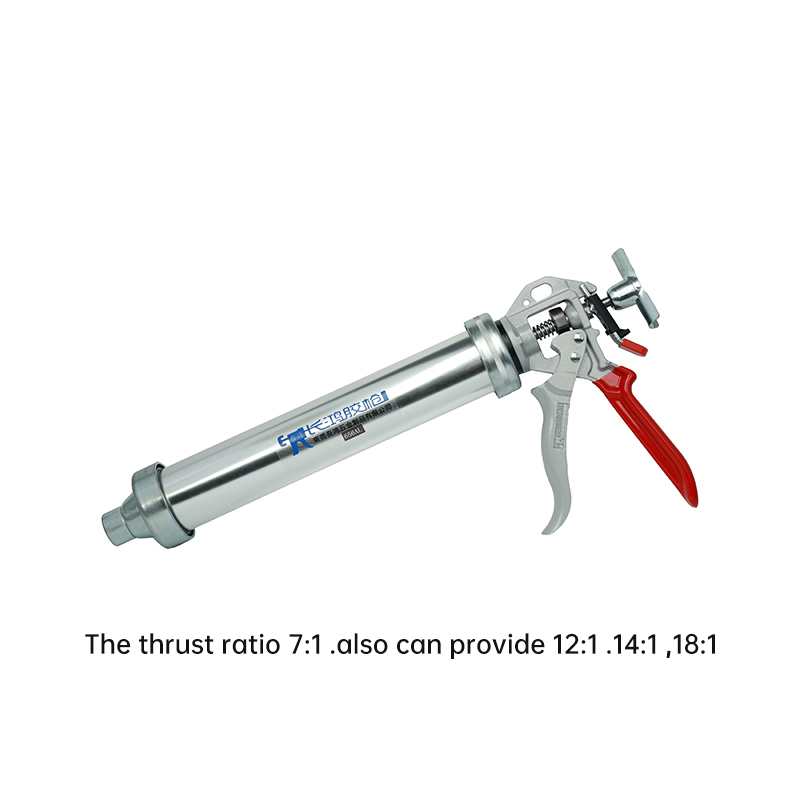
Furthermore, modern sealant tools often feature variable flow control mechanisms that enhance accuracy for different types of jobs. High-end models include a rotating dial or a tension adjustment knob near the handle. This feature allows the operator to fine-tune the resistance of the plunger. For thick, high-viscosity adhesives used in heavy-duty construction, the tension can be increased to prevent the heavy material from oozing out uncontrollably when the trigger is released. Conversely, for thin, runny sealants used in delicate finishing work, the tension can be relaxed to allow for a lighter touch. This adjustability ensures that the volume of material dispensed matches the specific requirements of the joint or gap being filled, preventing both under-filling (which leads to leaks) and over-filling (which creates unnecessary cleanup work).
Precision is also achieved through the seamless integration of the tool with the cartridge nozzle. The tip of a sealant cartridge is designed to be cut at a specific angle, typically 45 degrees, to match the width of the seam. The sealant gun holds the cartridge rigidly at this optimal angle relative to the work surface. This stability allows the nozzle to glide smoothly along the joint without wobbling. Many professional-grade guns also feature a built-in cutter and a poker (a thin wire attached to the handle) to prepare the cartridge perfectly before use. By ensuring the cartridge is punctured cleanly and the nozzle is trimmed to the exact size needed, the tool sets the stage for a precise bead that fits the gap perfectly without overflowing onto the surrounding substrate.
Another critical aspect of precision application is the prevention of drips and stringing after the bead is laid. Quality cartridge sealant tools are equipped with a quick-release lever or a swing-out rod. Once the user finishes a pass and releases the trigger, this mechanism instantly retracts the plunger slightly, creating negative pressure within the barrel. This suction effect stops the flow of sealant immediately, preventing the annoying "tail" or drip that often ruins a clean line. This feature gives the operator complete command over the start and stop points of the application, which is particularly important when working on visible areas like window frames, bathroom tiles, or automotive trim.
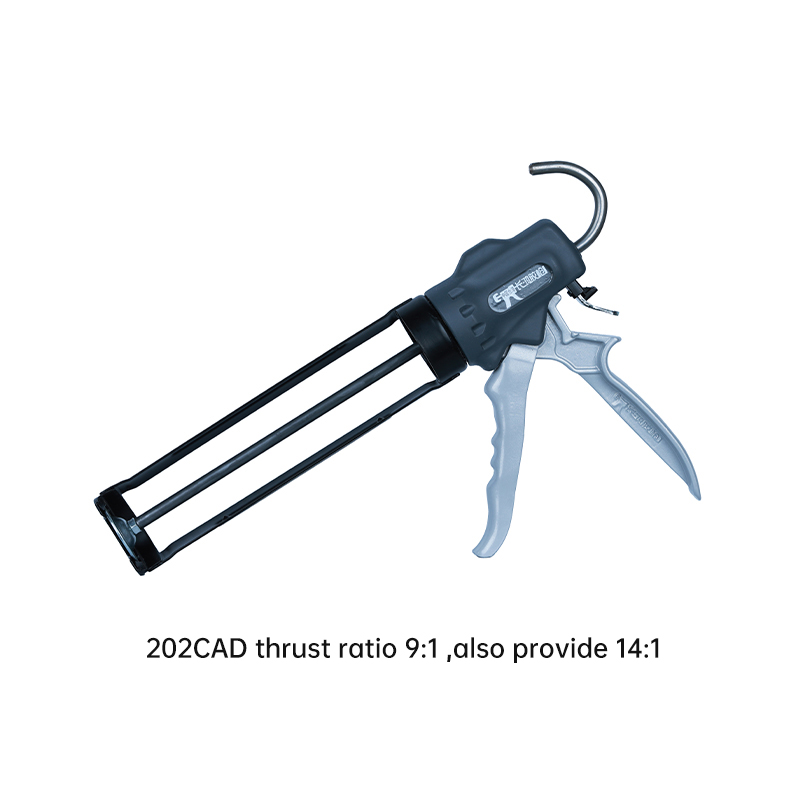
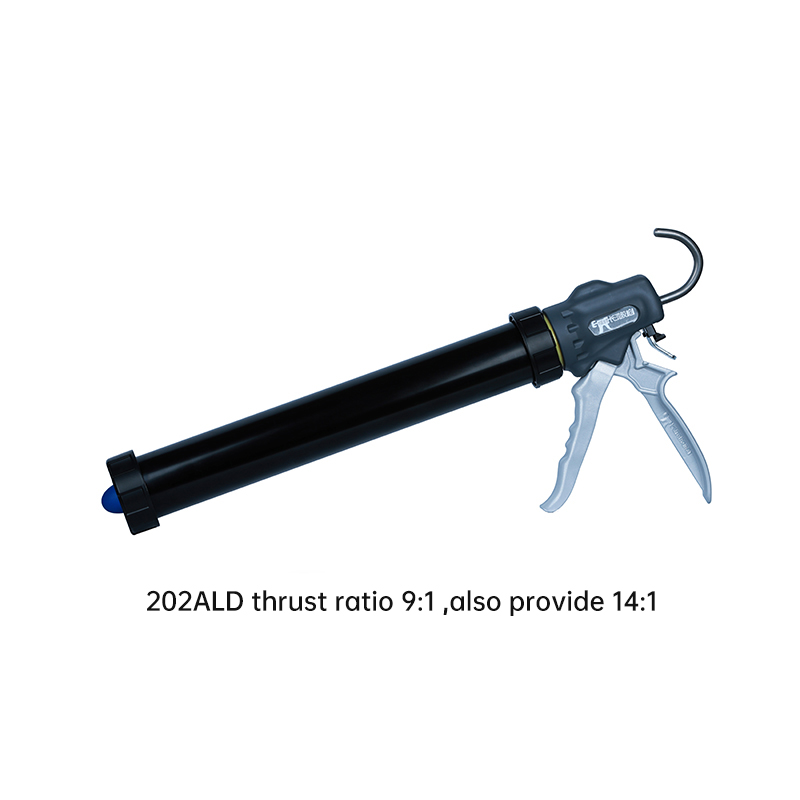
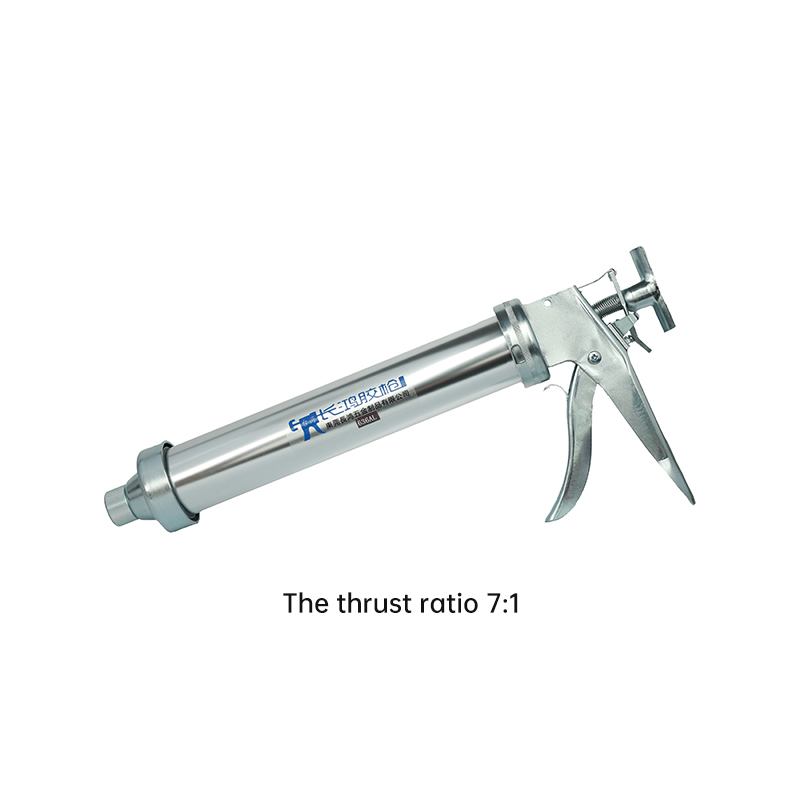
Ergonomics play a surprisingly large role in the accuracy of sealant application. Applying sealant often requires working in awkward positions, reaching overhead, or crouching in tight corners. If a tool is difficult to hold or requires excessive hand strength to operate, fatigue sets in quickly, leading to shaky hands and uneven lines. Contemporary sealant guns are designed with comfort grips and optimized leverage ratios (such as 18:1 thrust ratios). This means that for every pound of force the user exerts on the trigger, eighteen pounds of force are applied to the cartridge. This high mechanical efficiency reduces hand strain significantly, allowing the user to maintain a steady hand and smooth motion throughout long projects. A stable, comfortable grip directly translates to a smoother, more professional-looking seal.
Finally, the evolution of sealant tools has led to specialized designs for specific precision tasks. For example, battery-powered caulking guns provide an even higher level of consistency by using a motor to drive the plunger at a pre-set speed. This automation removes human variance entirely, making them ideal for industrial manufacturing where thousands of cartridges must be dispensed with identical precision. Even in manual tools, features like rotating barrels allow the user to twist the gun while keeping their wrist in a natural position, which is essential for maintaining a consistent bead angle around complex curves and corners.
In conclusion, a cartridge sealant tool ensures precise application through a combination of steady mechanical force, adjustable flow control, anti-drip technology, and ergonomic stability. It transforms the challenging task of manipulating thick, sticky compounds into a controlled, manageable process. By providing the user with the ability to dictate exactly how much material is dispensed and where it goes, the caulking gun remains an indispensable instrument for achieving durable, watertight, and aesthetically pleasing seals in any construction or repair project.