


How can the push rod structure design of an extrusion sealant tool (caulking gun) optimize the uniformity of glue dispensing?
Release Time : 2026-01-15
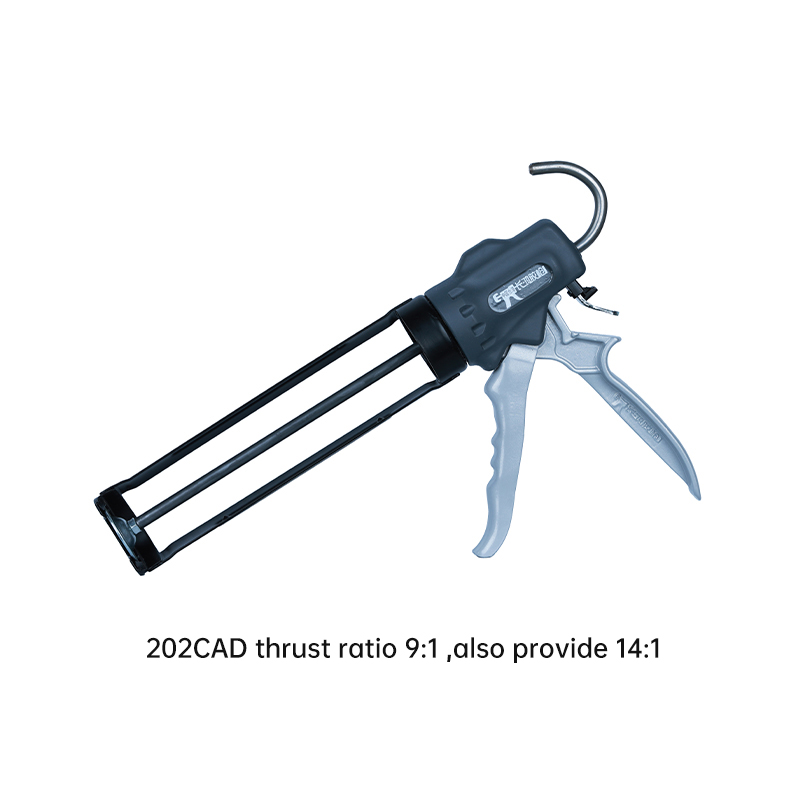
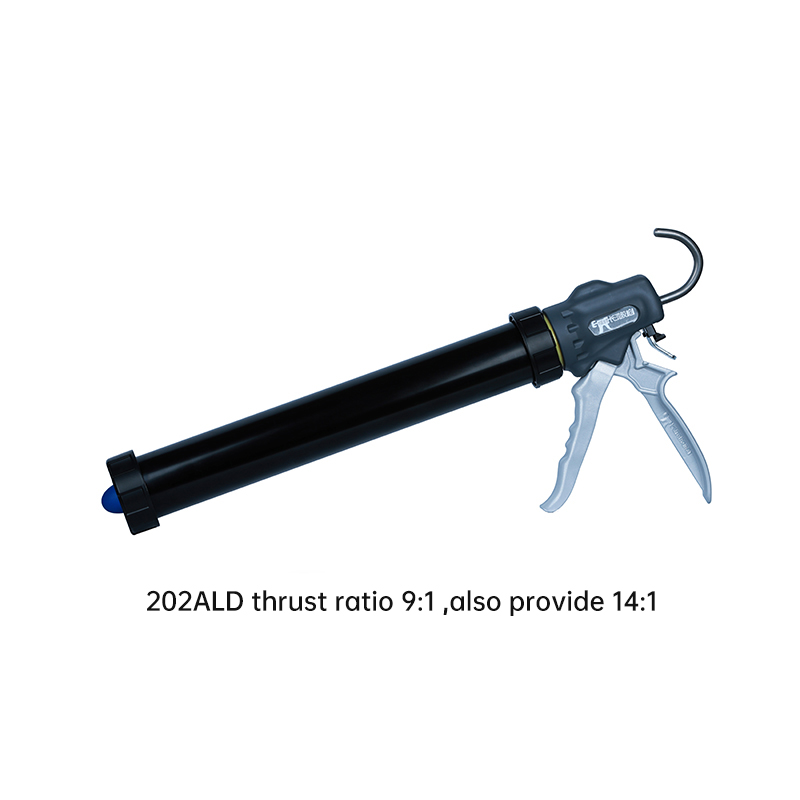
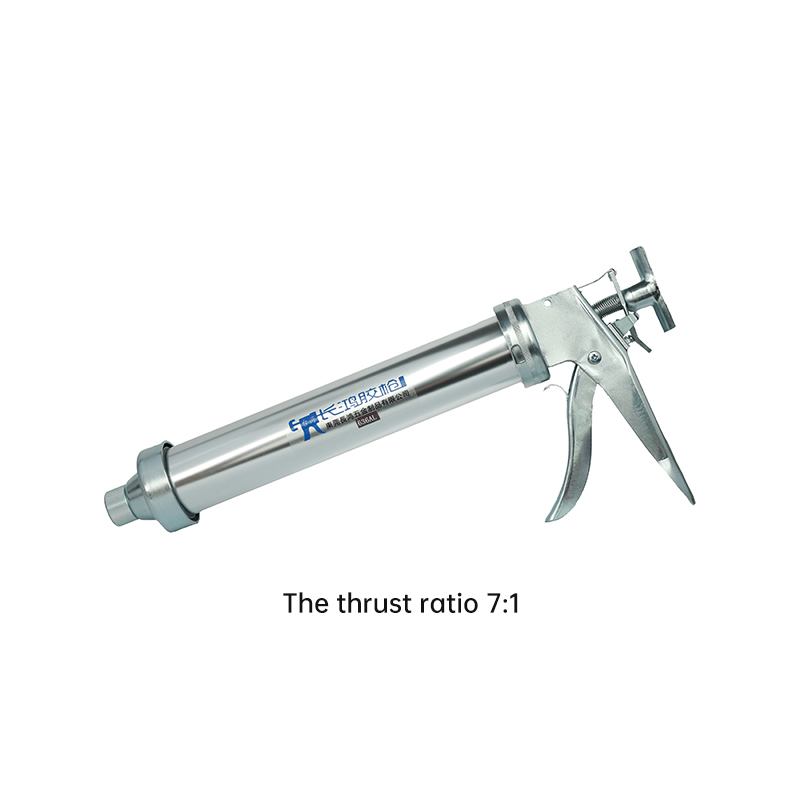
The push rod structure of the extrusion sealant tool (caulking gun) is a core component affecting the uniformity of sealant dispensing. Its design must consider multiple dimensions, including mechanical transmission, sealing performance, material compatibility, and operational feedback. As a key element directly driving the sealant flow, the push rod's structural optimization must revolve around three core objectives: "stable pressure output," "reduced sealant fluctuations," and "adaptability to different viscosities." Through synergistic improvements in material selection, shape design, sealing mechanisms, and linkage structures, sealant dispensing uniformity can be significantly improved.
The mechanical transmission efficiency of the extrusion sealant tool (caulking gun) push rod directly affects the stability of sealant dispensing. Traditional caulking gun push rods often use a single metal rod structure. While this can meet basic thrust requirements, it is prone to thrust attenuation due to material fatigue under high pressure or prolonged use, leading to fluctuations in sealant dispensing volume. Optimization directions include using high-strength alloy materials (such as stainless steel or aerospace-grade aluminum) to improve deformation resistance, and simultaneously reducing weight and operational fatigue through a hollow structure design. In addition, the push rod surface can be anodized or chrome-plated to enhance surface hardness, reduce frictional loss with the inner wall of the hose, and ensure continuous force transmission.
The seal between the push rod and the hose is crucial to preventing glue leakage and uneven dispensing. If there is a gap between the push rod and the inner wall of the hose, the glue may seep out under high pressure, resulting in a reduced actual glue dispensing volume. Conversely, if the seal is too tight, the push rod's movement resistance increases, easily causing operational jamming or glue breakage. Optimization solutions include designing a replaceable silicone sealing ring at the front end of the push rod, using elastic deformation to compensate for processing errors, and employing a tapered push rod head design to gradually tighten the contact surface, forming a progressive seal that reduces initial resistance while maintaining sealing under high pressure. Furthermore, some high-end caulking guns use a double-layer push rod structure: the outer layer is responsible for sealing, and the inner layer transmits the thrust, further isolating the impact of pressure fluctuations on glue dispensing.
The shape design of the push rod must adapt to the flow characteristics of sealants with different viscosities. Low-viscosity colloids (such as silicone sealants) have high flowability, requiring a continuous and stable pressure from the push rod to avoid flow interruption; high-viscosity colloids (such as polyurethane sealants) require a larger instantaneous thrust to overcome initial resistance. To address this difference, the push rod head shape can be optimized: a flat push rod is suitable for low-viscosity colloids to increase the contact area and disperse pressure; a pointed conical push rod is used for high-viscosity colloids to concentrate pressure and quickly overcome colloid resistance. Some designs also incorporate an adjustable push rod angle mechanism, changing the contact surface inclination by rotating the push rod, achieving "one gun for multiple uses" and adapting to various colloid types.
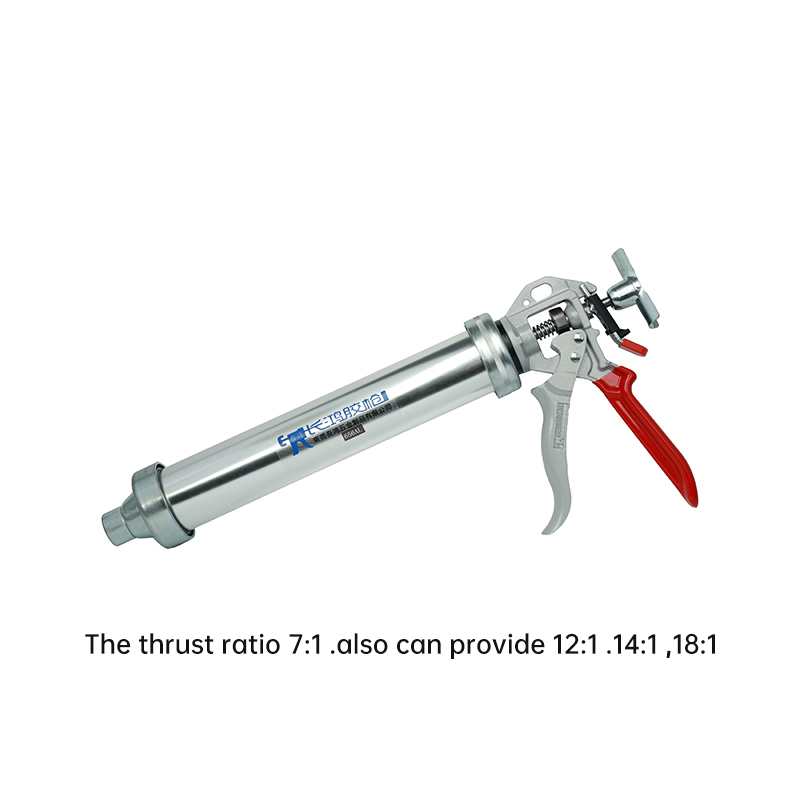
The linkage structure between the push rod and trigger directly affects operational feedback and dispensing control. Traditional caulking guns often use lever-type triggers, driving the push rod through single-point force application. However, the lever length and fulcrum position are fixed, making it difficult to balance effortless operation with precise control. Optimization solutions include using a two-stage lever structure: the first stage lever amplifies the hand force, and the second stage lever fine-tunes the push rod stroke, achieving a balance between "strong dispensing" and "fine adjustment." In addition, some designs incorporate a spring-reset mechanism, automatically retracting the push rod after the trigger is released to prevent the adhesive from continuing to flow due to residual pressure. Simultaneously, adjusting the spring stiffness controls the retraction speed to prevent adhesive backflow and discontinuation.
Push rod stroke control is crucial for ensuring consistent adhesive dispensing. If the push rod stroke is too long, the dispensing volume per operation is excessive, leading to waste; if the stroke is too short, frequent pressing is required, increasing operational difficulty. Optimization efforts include incorporating adjustable limit blocks on the push rod. Rotating or sliding these limit blocks alters the maximum stroke, adapting to different application scenarios (such as filling narrow gaps and applying adhesive over large areas). Some designs also incorporate electronic stroke sensors to monitor the push rod position in real time and display the remaining adhesive level, helping users precisely control the dispensing volume.
Durability design of the push rod extends tool life and reduces uneven dispensing caused by component wear. Over time, friction between the push rod and the inner wall of the adhesive tube can cause surface scratches, potentially leading to leakage or jamming. The optimization solution includes coating the push rod surface with a wear-resistant coating (such as a ceramic coating or PTFE coating) to reduce the coefficient of friction and enhance scratch resistance. In addition, the connection points between the push rod and the trigger (such as riveting points or threads) need to be reinforced to prevent loosening due to frequent operation, which could affect the efficiency of force transmission.
The modular design of the push rod structure improves the tool's versatility and ease of maintenance. Traditional caulking gun push rods are often fixed to the trigger and hose; if any component is damaged, the entire unit must be replaced, resulting in high costs. The optimization solution includes a detachable push rod design, connected to the trigger via a quick connector, allowing users to replace push rods of different specifications (such as different lengths or head shapes) to fit different hose sizes. Simultaneously, the modular design facilitates cleaning, preventing adhesive residue from obstructing push rod movement and further ensuring uniform adhesive dispensing.