


How does the caulking gun redefine the efficiency and quality of sealing applications through ergonomics and precise control?
Release Time : 2026-02-25
In numerous scenarios, including building renovation, home repair, and even industrial assembly, applying sealant may seem simple, but it actually demands extremely high standards of uniformity, continuity, and ease of use. Manual extrusion is not only laborious but also prone to uneven application, breaks, or waste. The caulking gun—an extrusion tool specifically designed for cartridge sealant—transforms arduous sealing tasks into an easy, precise, and efficient experience thanks to its lever-based, effortless design, smooth propulsion mechanism, and user-friendly details. It has become an indispensable tool for professional craftsmen and DIY enthusiasts alike.
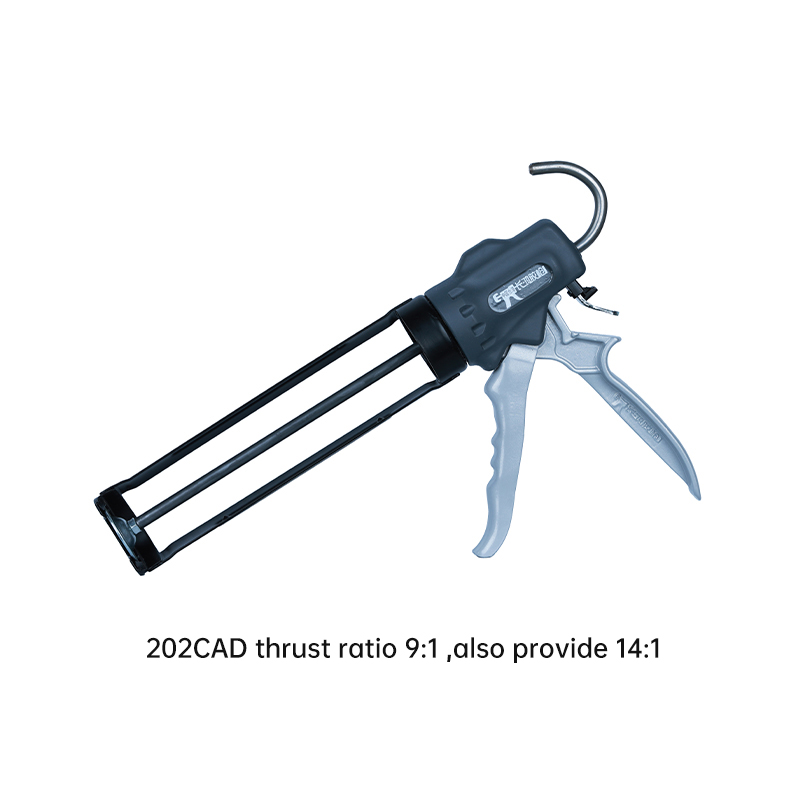
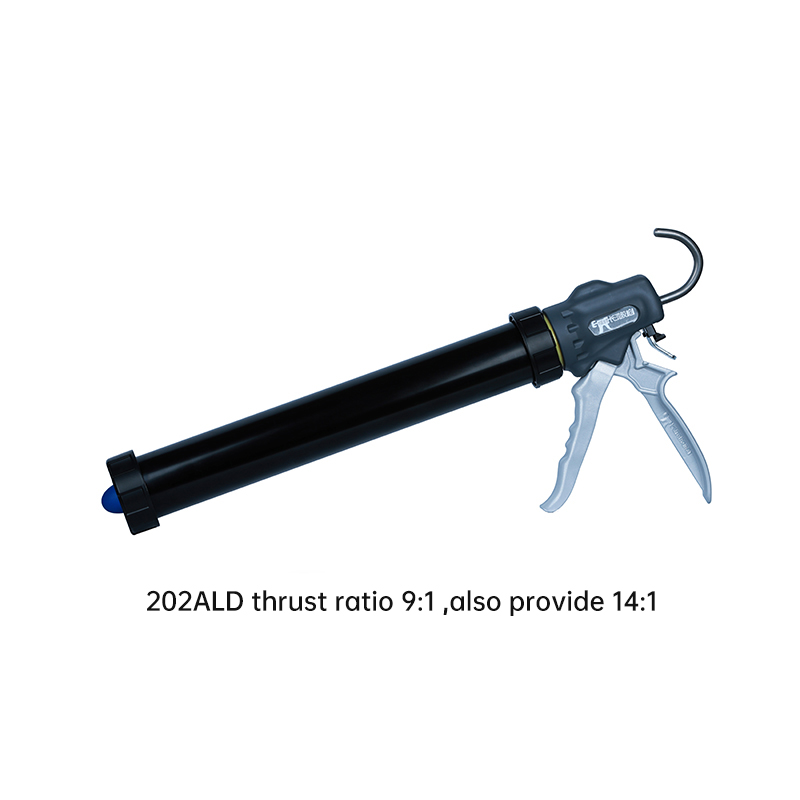
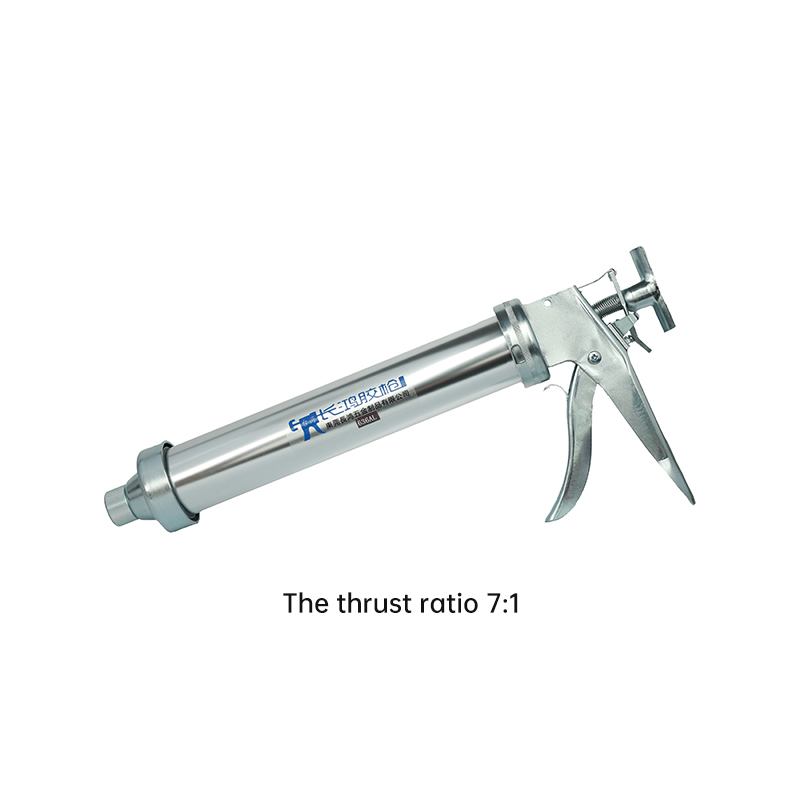
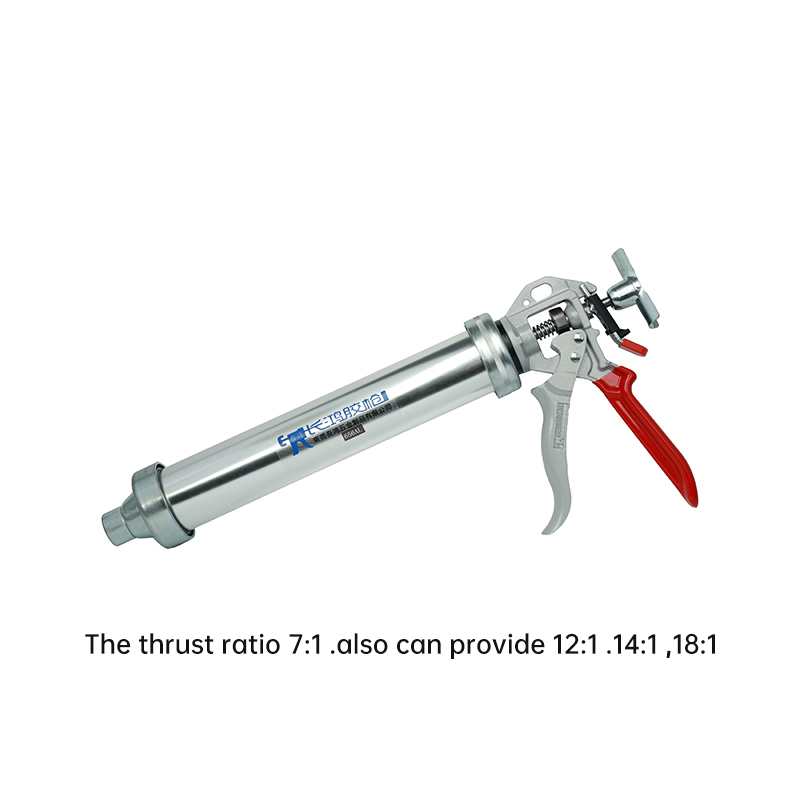
The core advantage of the caulking gun lies first and foremost in its superior mechanical efficiency. The lever handle, made of high-strength metal or engineering plastic, amplifies the user's grip force through a scientifically proportioned lever arm, allowing for easy and smooth piston movement even with high-viscosity silicone, polyurethane, or epoxy sealants. This labor-saving design significantly reduces hand fatigue during prolonged work, especially in window frame installation, bathroom trimming, or curtain wall joint treatment requiring continuous caulking, dramatically improving work efficiency and construction durability.
Its precise control is equally outstanding. The high-quality caulking gun is equipped with an adjustable thrust device, allowing users to fine-tune the dispensing speed according to the adhesive consistency; the piston rod operates smoothly without jamming, ensuring consistent adhesive thickness and continuous flow; the open front design is compatible with most standard adhesive cartridges on the market, making loading and unloading convenient. Some high-end models even integrate an anti-drip valve that automatically locks the nozzle the moment the trigger is released, preventing excess adhesive from dripping and contaminating the finished finish. This precise, point-and-shoot control allows for seamless application of grout lines as fine as a few millimeters or structural seals as wide as several centimeters.
Ergonomic design further optimizes the user experience. The handle contours fit the palm and is covered with non-slip soft rubber, ensuring a stable grip even with sweaty or adhesive-covered hands; the lightweight body reduces overall burden; and a hanging hole at the rear facilitates storage or portability. For sealing ceiling joints or pipes in narrow corners where work requires looking up, these details greatly enhance operational flexibility and safety.
In terms of durability, the caulking gun also excels. Key load-bearing components such as gears, push rods, and supports are made of metal, making them resistant to deformation and corrosion; the moving joints are precision-assembled, maintaining smooth operation even after long-term use; the overall structure is easy to disassemble and clean, and residual adhesive can be quickly removed, extending its lifespan. A high-quality caulking gun can accompany a user through hundreds of sealing tasks, becoming a truly "long-lasting tool."
A deeper value lies in its role in driving the transformation of sealing processes from "experience-based" to "standardized operation." Even beginners can use the caulking gun to create even, straight, and full adhesive lines, reducing rework and material waste. In modern renovations that pursue a refined finish, a perfect seal line is not only a functional requirement but also an aesthetic expression—and the caulking gun is the key medium to achieve this.
Furthermore, its applications extend far beyond the home. In automobile manufacturing, it's used for windshield sealing; in ship assembly, for treating deck joints; and in electronic equipment assembly, for potting protective adhesives—the caulking gun supports the precision bonding needs of multiple industries with its reliable performance.
While its structure is simple, the caulking gun is a culmination of function and ingenuity. It uses leverage to overcome physical limitations, ensuring smooth application and maintaining high-quality workmanship. With each press, it transforms viscous adhesive into a perfectly sealed protective barrier. When the adhesive line extends evenly across tile grout lines or window frame edges, it's not just about filling material, but also about respecting detail—because true professionalism often lies in the ease and precision that a good tool brings.
The core advantage of the caulking gun lies first and foremost in its superior mechanical efficiency. The lever handle, made of high-strength metal or engineering plastic, amplifies the user's grip force through a scientifically proportioned lever arm, allowing for easy and smooth piston movement even with high-viscosity silicone, polyurethane, or epoxy sealants. This labor-saving design significantly reduces hand fatigue during prolonged work, especially in window frame installation, bathroom trimming, or curtain wall joint treatment requiring continuous caulking, dramatically improving work efficiency and construction durability.
Its precise control is equally outstanding. The high-quality caulking gun is equipped with an adjustable thrust device, allowing users to fine-tune the dispensing speed according to the adhesive consistency; the piston rod operates smoothly without jamming, ensuring consistent adhesive thickness and continuous flow; the open front design is compatible with most standard adhesive cartridges on the market, making loading and unloading convenient. Some high-end models even integrate an anti-drip valve that automatically locks the nozzle the moment the trigger is released, preventing excess adhesive from dripping and contaminating the finished finish. This precise, point-and-shoot control allows for seamless application of grout lines as fine as a few millimeters or structural seals as wide as several centimeters.
Ergonomic design further optimizes the user experience. The handle contours fit the palm and is covered with non-slip soft rubber, ensuring a stable grip even with sweaty or adhesive-covered hands; the lightweight body reduces overall burden; and a hanging hole at the rear facilitates storage or portability. For sealing ceiling joints or pipes in narrow corners where work requires looking up, these details greatly enhance operational flexibility and safety.
In terms of durability, the caulking gun also excels. Key load-bearing components such as gears, push rods, and supports are made of metal, making them resistant to deformation and corrosion; the moving joints are precision-assembled, maintaining smooth operation even after long-term use; the overall structure is easy to disassemble and clean, and residual adhesive can be quickly removed, extending its lifespan. A high-quality caulking gun can accompany a user through hundreds of sealing tasks, becoming a truly "long-lasting tool."
A deeper value lies in its role in driving the transformation of sealing processes from "experience-based" to "standardized operation." Even beginners can use the caulking gun to create even, straight, and full adhesive lines, reducing rework and material waste. In modern renovations that pursue a refined finish, a perfect seal line is not only a functional requirement but also an aesthetic expression—and the caulking gun is the key medium to achieve this.
Furthermore, its applications extend far beyond the home. In automobile manufacturing, it's used for windshield sealing; in ship assembly, for treating deck joints; and in electronic equipment assembly, for potting protective adhesives—the caulking gun supports the precision bonding needs of multiple industries with its reliable performance.
While its structure is simple, the caulking gun is a culmination of function and ingenuity. It uses leverage to overcome physical limitations, ensuring smooth application and maintaining high-quality workmanship. With each press, it transforms viscous adhesive into a perfectly sealed protective barrier. When the adhesive line extends evenly across tile grout lines or window frame edges, it's not just about filling material, but also about respecting detail—because true professionalism often lies in the ease and precision that a good tool brings.