


How can a precision control device improve the dispensing accuracy of an extrusion sealant tool in fine caulking operations?
Release Time : 2026-03-10
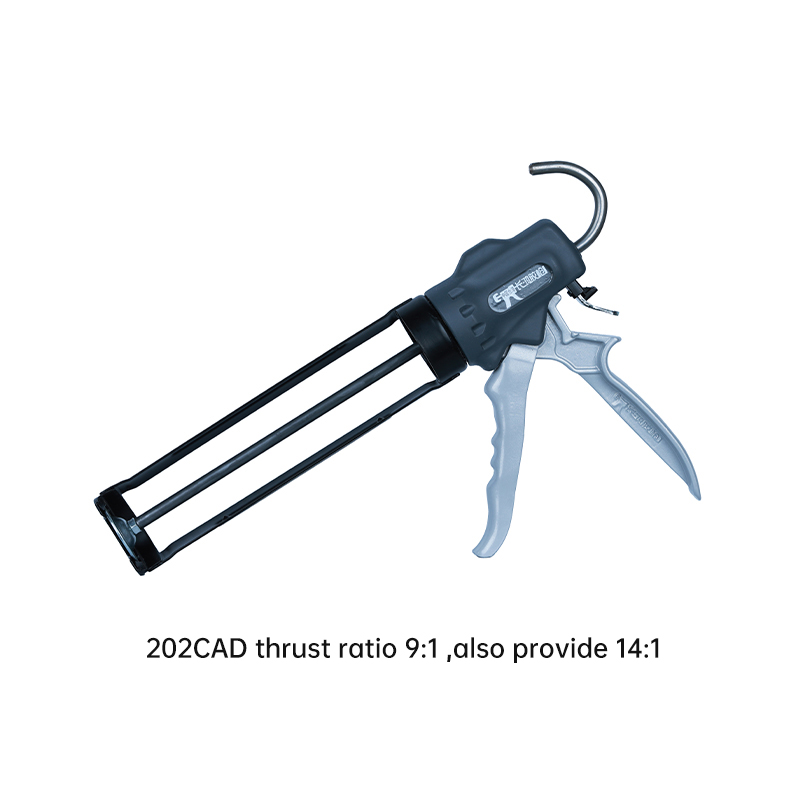
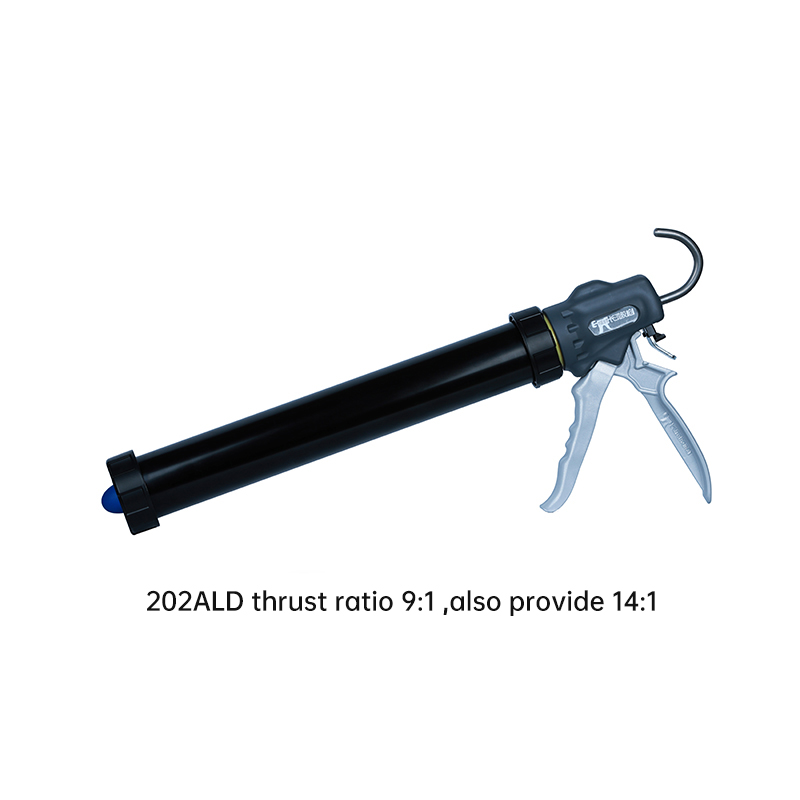
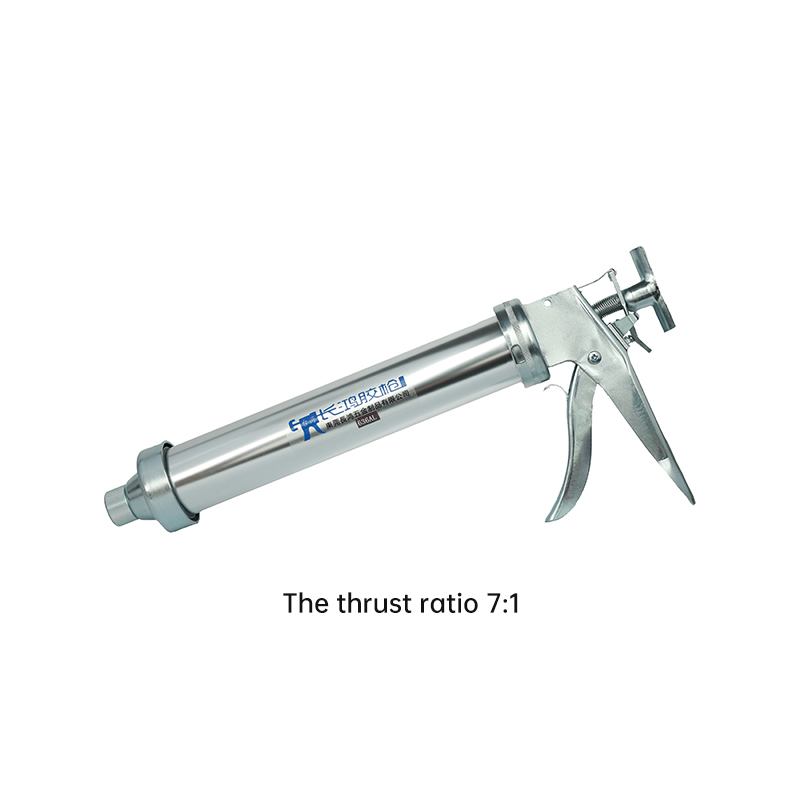
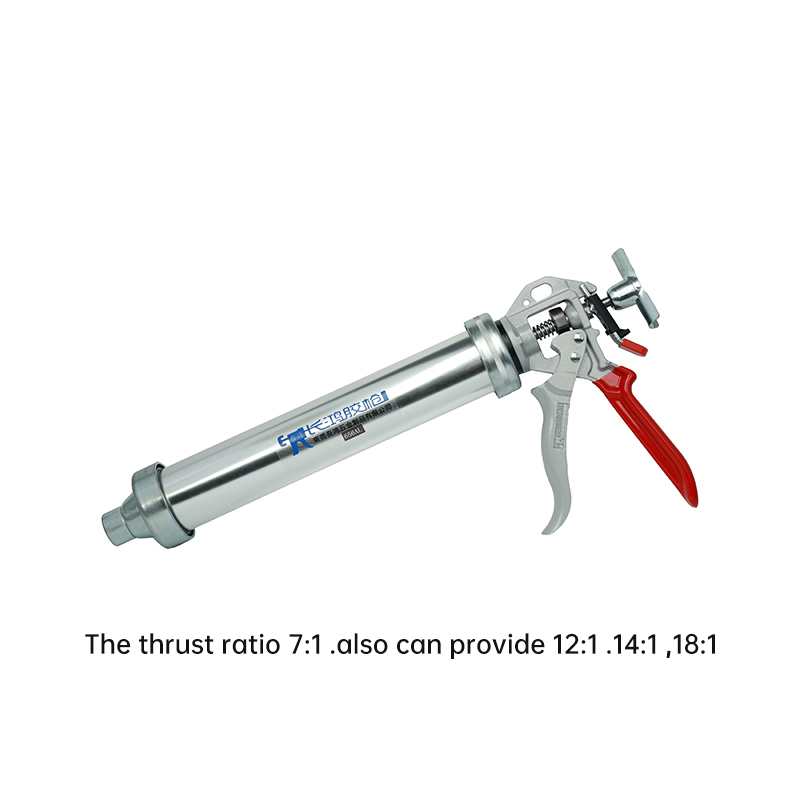
In building decoration, home improvement construction, and equipment sealing operations, the extrusion sealant tool is a common and practical tool, mainly used to extrude cartridge sealant to complete gap filling and sealing. In fine caulking operations, the stability and control accuracy of the dispensing directly affect the construction quality. If the dispensing amount is too large or uneven, it can easily lead to sealant waste, uneven surfaces, and even affect the sealing effect.
1. Precision Pusher Structure Improves Dispensing Stability
The pusher structure of the extrusion sealant tool is the core component controlling the sealant extrusion. In fine caulking operations, by designing a high-precision pusher drive structure, the pusher can maintain a stable movement speed during the advancement process. Each movement of the pusher drives the piston inside the sealant cartridge forward slowly, thereby achieving a continuous and uniform dispensing effect. If the pusher structure is designed properly, it can avoid the situation of suddenly extruding a large amount of sealant, allowing the construction worker to more accurately control the amount of sealant dispensed.
2. Ratchet Control Mechanism for Segmented Adjustment
Many high-quality extrusion sealant tools employ a ratchet control mechanism to improve dispensing accuracy. This structure provides segmented advancement during operation; when the user presses the handle, the push rod advances in fixed steps. This allows for better control of the amount of sealant dispensed each time, resulting in a smoother dispensing process. The ratchet mechanism also locks the push rod position when operation stops, preventing sealant overflow and reducing material waste during application.
3. Pressure Relief Device Reduces Drips
Drips often affect the caulking effect during precise application. To address this, some extrusion sealant tools incorporate a pressure relief device. When the operator releases the handle, this device quickly releases the pressure generated by the push rod, stopping the sealant flow. This design effectively prevents continuous dripping of sealant from the nozzle, ensuring a neater and more aesthetically pleasing caulking line.
4. Optimized Handle Structure Enhances Operational Control
The handle design of the extrusion sealant tool also affects dispensing accuracy. By employing an ergonomic handle structure, installers can more easily control the pressure applied during operation. For example, increasing the handle's curvature or optimizing the grip angle allows for more even force distribution on the hand. This enables users to more accurately control the pushing force during fine caulking, resulting in a more stable dispensing speed.
5. Nozzle Structure Design Improves Caulking Accuracy
Besides the control device, the nozzle structure also significantly impacts dispensing accuracy. By designing nozzles of different diameters and shapes, the dispensing width can be adjusted according to the application needs. For example, a narrow nozzle is suitable for filling narrow gaps, while a wider nozzle is suitable for sealing large areas. A well-designed nozzle allows the sealant to flow more concentratedly to the target location, thereby improving overall application quality.
In fine caulking operations, the extrusion sealant tool effectively improves dispensing control accuracy through a precision push rod structure, ratchet control mechanism, pressure release device, and ergonomic handle. These structures not only ensure more uniform and stable sealant extrusion but also reduce material waste and improve application efficiency.
1. Precision Pusher Structure Improves Dispensing Stability
The pusher structure of the extrusion sealant tool is the core component controlling the sealant extrusion. In fine caulking operations, by designing a high-precision pusher drive structure, the pusher can maintain a stable movement speed during the advancement process. Each movement of the pusher drives the piston inside the sealant cartridge forward slowly, thereby achieving a continuous and uniform dispensing effect. If the pusher structure is designed properly, it can avoid the situation of suddenly extruding a large amount of sealant, allowing the construction worker to more accurately control the amount of sealant dispensed.
2. Ratchet Control Mechanism for Segmented Adjustment
Many high-quality extrusion sealant tools employ a ratchet control mechanism to improve dispensing accuracy. This structure provides segmented advancement during operation; when the user presses the handle, the push rod advances in fixed steps. This allows for better control of the amount of sealant dispensed each time, resulting in a smoother dispensing process. The ratchet mechanism also locks the push rod position when operation stops, preventing sealant overflow and reducing material waste during application.
3. Pressure Relief Device Reduces Drips
Drips often affect the caulking effect during precise application. To address this, some extrusion sealant tools incorporate a pressure relief device. When the operator releases the handle, this device quickly releases the pressure generated by the push rod, stopping the sealant flow. This design effectively prevents continuous dripping of sealant from the nozzle, ensuring a neater and more aesthetically pleasing caulking line.
4. Optimized Handle Structure Enhances Operational Control
The handle design of the extrusion sealant tool also affects dispensing accuracy. By employing an ergonomic handle structure, installers can more easily control the pressure applied during operation. For example, increasing the handle's curvature or optimizing the grip angle allows for more even force distribution on the hand. This enables users to more accurately control the pushing force during fine caulking, resulting in a more stable dispensing speed.
5. Nozzle Structure Design Improves Caulking Accuracy
Besides the control device, the nozzle structure also significantly impacts dispensing accuracy. By designing nozzles of different diameters and shapes, the dispensing width can be adjusted according to the application needs. For example, a narrow nozzle is suitable for filling narrow gaps, while a wider nozzle is suitable for sealing large areas. A well-designed nozzle allows the sealant to flow more concentratedly to the target location, thereby improving overall application quality.
In fine caulking operations, the extrusion sealant tool effectively improves dispensing control accuracy through a precision push rod structure, ratchet control mechanism, pressure release device, and ergonomic handle. These structures not only ensure more uniform and stable sealant extrusion but also reduce material waste and improve application efficiency.