


How to optimize the structure of a sealant tool (caulking gun) to prevent colloid backflow when processing sausage-shaped glue?
Release Time : 2026-04-08
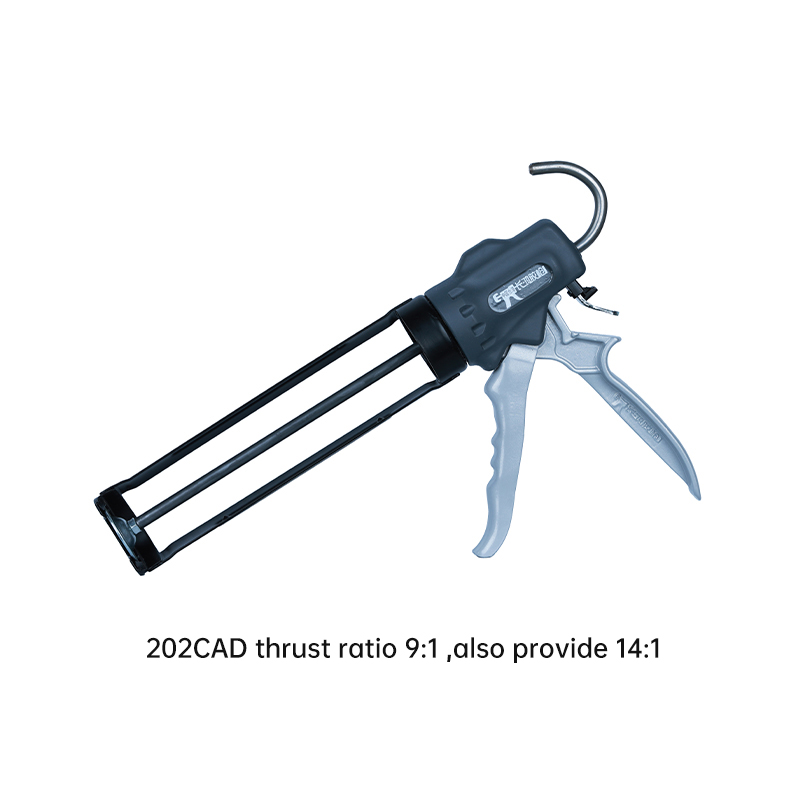
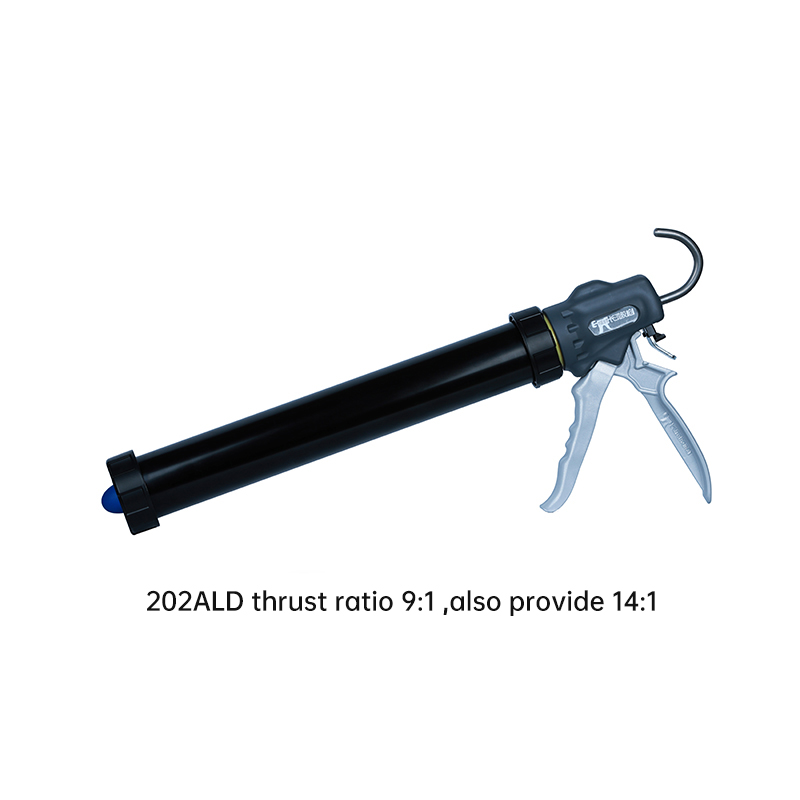
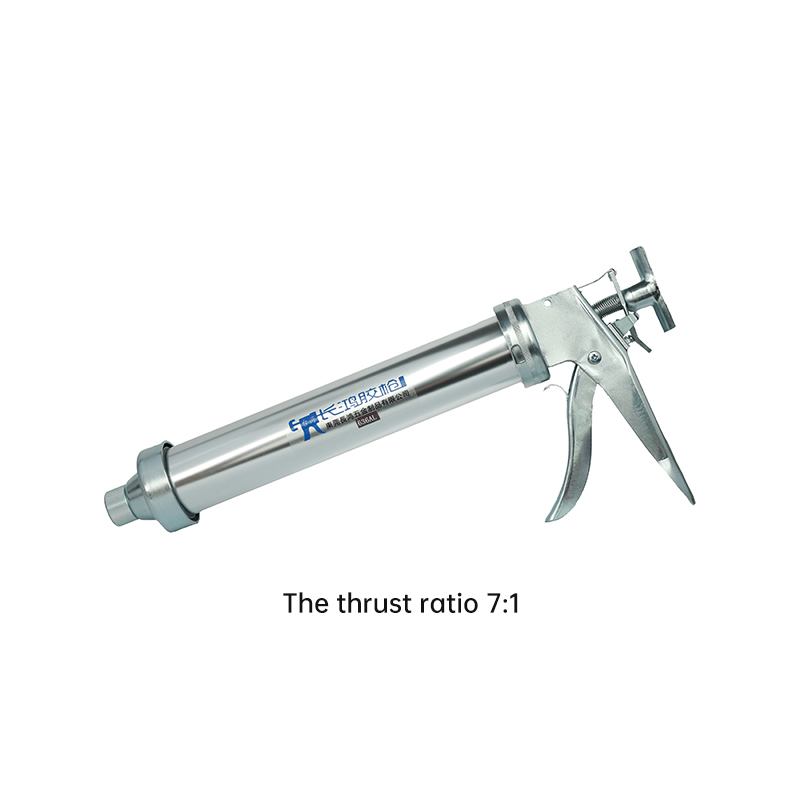
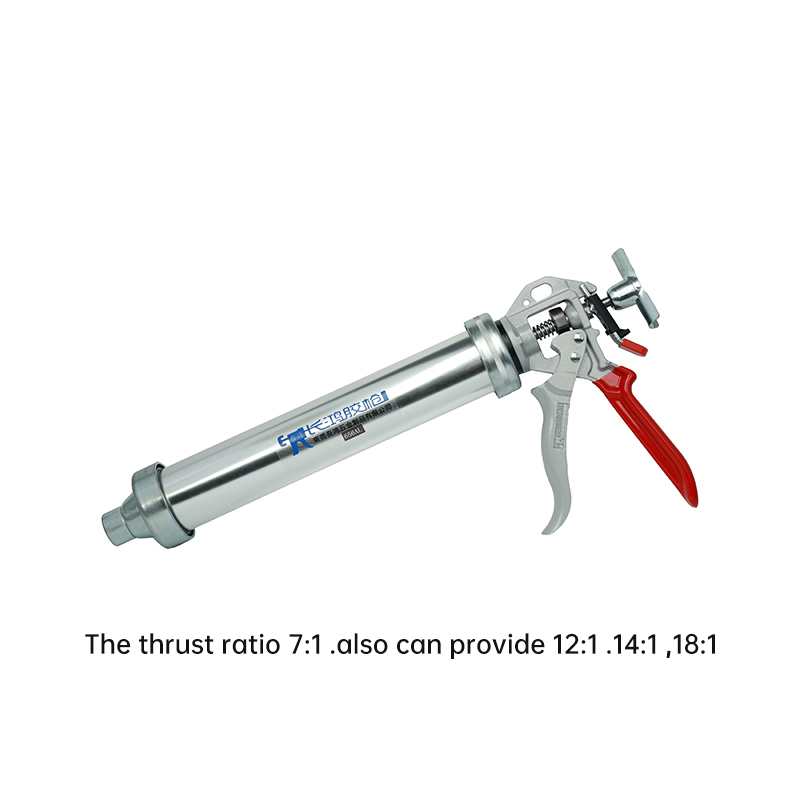
When processing sausage-shaped adhesives, optimizing the structure of the sealant tool (caulking gun) to prevent backflow requires comprehensive consideration of multiple aspects, including core component design, enhanced sealing performance, improved push rod stability, improved nozzle compatibility, internal pressure balance, optimized ease of operation, and enhanced material compatibility.
The flexible packaging characteristics of sausage-shaped adhesives require a high degree of fit between the push rod and the adhesive tube in the caulking gun. Traditional flat-mouth push rods easily cause the tube edges to curl during extrusion, creating backflow channels. An optimized solution is to use an arc-shaped push rod design, whose curved surface perfectly matches the outer wall of the sausage-shaped adhesive tube. By increasing the contact area, it reduces local pressure concentration and prevents tube deformation. Simultaneously, anti-slip textures are added to the front end of the push rod to increase friction and prevent slippage, ensuring unidirectional flow of the adhesive during extrusion.
Sealing performance is crucial to preventing backflow. The sealant tool (caulking gun) requires a double-layer sealing structure at the contact point between the gun body and the hose: the inner layer is a soft silicone sealing ring to accommodate different hose diameters; the outer layer is a hard plastic clip that secures the hose to the gun body via a rotation locking mechanism. This design prevents the adhesive from flowing back through the gap between the gun body and the hose, and also avoids the hose from detaching due to excessive extrusion pressure. Furthermore, an exhaust valve is added to the rear of the gun body to release internal air during hose loading, preventing pressure fluctuations caused by air resistance.
The stability of the push rod system directly affects the uniformity of extrusion. Traditional spring-return structures are prone to elasticity decay due to repeated use, causing the push rod to rebound too quickly and resulting in adhesive backflow. The improved solution uses a hydraulic buffer device with a sealed hydraulic chamber behind the push rod. The resistance of the hydraulic flow slows down the rebound speed, making the push rod return process smooth and controllable. Simultaneously, a push rod stroke limiter prevents excessive retraction and avoids hose backflow due to negative pressure.
The nozzle design must be matched to the dispensing characteristics of sausage-shaped adhesive. Traditional straight-tube nozzles are prone to unstable flow rates due to differences in colloid viscosity. The optimized conical nozzle employs a tapered structure, increasing dispensing pressure by reducing the outlet cross-sectional area, ensuring a stable flow rate for the colloid. An internal spiral guide groove generates centrifugal force during colloid flow, reducing frictional resistance with the tube wall and further minimizing backflow risk.
An internal pressure balancing mechanism effectively prevents colloid backflow. The sealant tool (caulking gun) features a one-way valve at the front end, with a valve core made of lightweight plastic that allows only forward colloid flow. When extrusion stops, the valve core automatically closes under colloid pressure, blocking the backflow path. Simultaneously, a pressure buffer chamber inside the gun absorbs pressure pulses generated during extrusion, preventing backflow due to sudden pressure changes.
Optimized ease of operation reduces backflow issues caused by human error. The ergonomic handle design, with its increased grip area and anti-slip treatment, enhances operational stability. The trigger travel and push rod movement ratio have been precisely calibrated to ensure even glue dispensing with a light touch of the trigger, preventing glue spraying or backflow due to excessive force. Furthermore, a glue tube retainer is added to the rear of the gun to assist in positioning the glue tube during loading, preventing seal failure caused by misalignment.
Enhanced material compatibility expands the applicability of the caulking gun. For sausage-shaped glues of varying viscosities, the internal coating of the gun body is treated with Teflon, whose low coefficient of friction reduces glue residue and prevents channel blockage due to glue curing. Simultaneously, the contact area between the push rod and the glue tube is made of wear-resistant engineering plastic, extending the tool's lifespan and ensuring structural stability during long-term use.