


How can the thrust structure design of a caulking gun for extruding sealant improve the smoothness and uniformity of dispensing?
Release Time : 2026-04-22
In the design of a caulking gun for extruding sealant, the thrust structure directly determines the smoothness and uniformity of the dispensing process. Insufficient thrust leads to intermittent dispensing and strenuous operation, while unstable thrust easily causes inconsistent dispensing, affecting the quality of the application. Systematic optimization of the thrust structure to achieve stable, continuous, and controllable dispensing is the core of improving caulking gun performance.
1. Enhanced Throttle Transmission Structure for Improved Throttle Output Efficiency
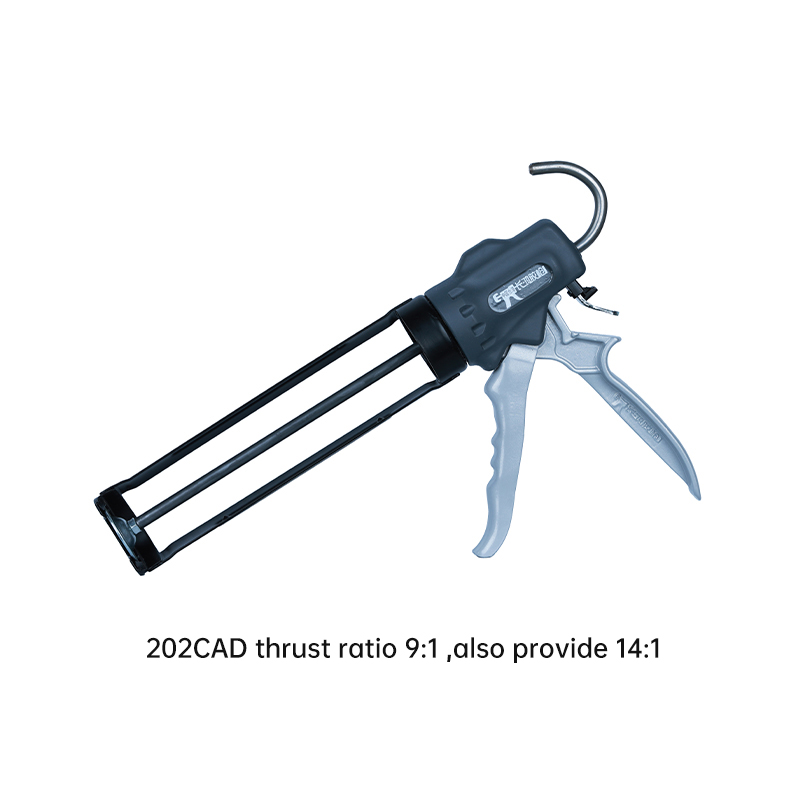
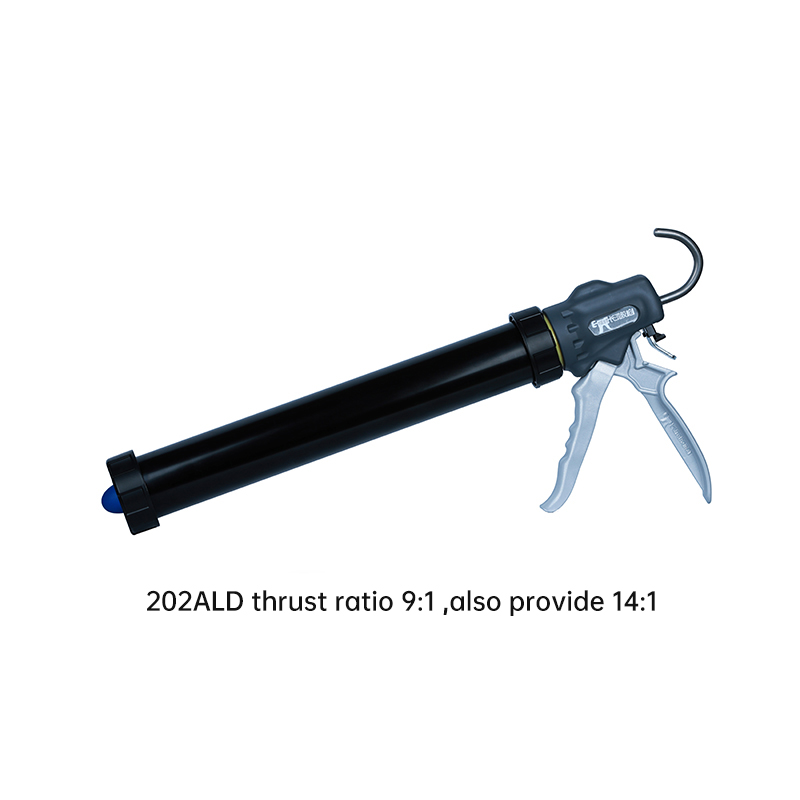
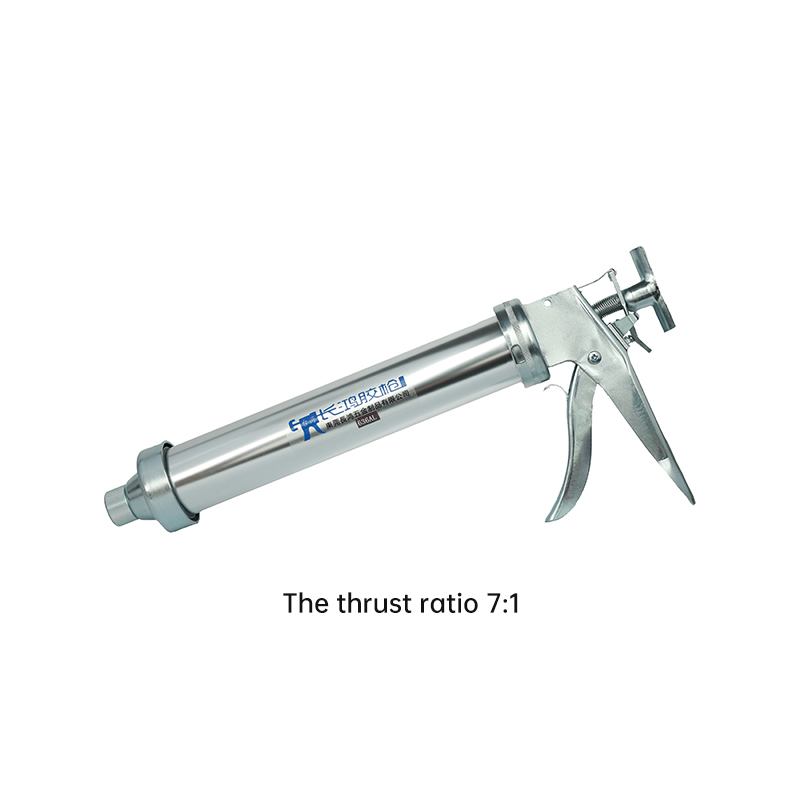
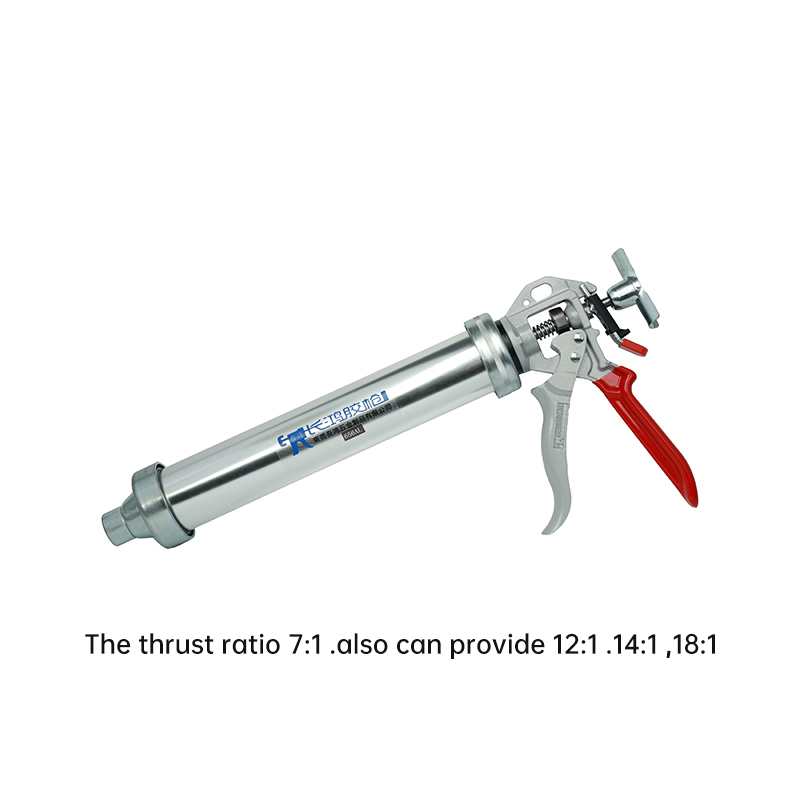
By employing a highly efficient thrust transmission structure, such as a lever amplification or gear propulsion mechanism, greater thrust output can be obtained with less manual force input. This design not only reduces the operator's effort but also maintains stable propulsion when dealing with high-viscosity sealants, thus avoiding dispensing difficulties caused by insufficient thrust and significantly improving application continuity.
2. Linear Guide Design for Uniform Force Distribution
As the core component directly acting on the bottom of the glue cartridge, the stability of the push rod's movement is crucial. By optimizing the push rod's linear guide structure, it maintains axial force throughout the push process, effectively preventing deviation or jamming. Uniform force distribution helps the sealant be evenly compressed within the cartridge, resulting in a smooth and continuous dispensing effect.
3. Segmented Push Mechanism for Precise Control
Introducing a segmented push or fine-tuning mechanism into the thrust structure allows the operator to flexibly control the dispensing speed according to construction needs. By refining the push step distance, each trigger action corresponds to a small change in the amount of sealant dispensed, thereby improving the precision of dispensing control. This is particularly important for scenarios requiring meticulous caulking or decorative construction, contributing to the formation of a uniform and aesthetically pleasing glue line.
4. Anti-Rebound Structure Reduces Drips and Unevenness
In traditional caulking guns, rebound is prone to occur after releasing the thrust, causing the sealant to continue to overflow or drip. By incorporating anti-rebound designs, such as anti-reverse devices or damping structures, into the thrust structure, the push rod position can be quickly locked when force is stopped, preventing excessive adhesive discharge. This not only improves the controllability of adhesive discharge but also reduces material waste and construction pollution.
5. Optimized Handling Experience Through Smooth Thrust Output Mechanism
To achieve a more uniform adhesive discharge, buffering or damping designs can be added to the thrust structure to make the thrust output smoother. By reducing sudden forces during propulsion, fluctuations in adhesive discharge caused by excessive instantaneous thrust are avoided, thus achieving stable and continuous adhesive extrusion. Simultaneously, this smooth thrust feedback also improves the operating feel, making application smoother and more natural.
In summary, for tubular sealant applications, optimizing the thrust structure in multiple aspects, including force-enhancing transmission, linear guidance, segmented propulsion, anti-rebound, and smooth output, can effectively improve the smoothness and uniformity of adhesive discharge from the caulking gun. This improvement approach, centered on structural design, not only improves construction efficiency but also provides a reliable guarantee for achieving high-quality sealing operations.
1. Enhanced Throttle Transmission Structure for Improved Throttle Output Efficiency
By employing a highly efficient thrust transmission structure, such as a lever amplification or gear propulsion mechanism, greater thrust output can be obtained with less manual force input. This design not only reduces the operator's effort but also maintains stable propulsion when dealing with high-viscosity sealants, thus avoiding dispensing difficulties caused by insufficient thrust and significantly improving application continuity.
2. Linear Guide Design for Uniform Force Distribution
As the core component directly acting on the bottom of the glue cartridge, the stability of the push rod's movement is crucial. By optimizing the push rod's linear guide structure, it maintains axial force throughout the push process, effectively preventing deviation or jamming. Uniform force distribution helps the sealant be evenly compressed within the cartridge, resulting in a smooth and continuous dispensing effect.
3. Segmented Push Mechanism for Precise Control
Introducing a segmented push or fine-tuning mechanism into the thrust structure allows the operator to flexibly control the dispensing speed according to construction needs. By refining the push step distance, each trigger action corresponds to a small change in the amount of sealant dispensed, thereby improving the precision of dispensing control. This is particularly important for scenarios requiring meticulous caulking or decorative construction, contributing to the formation of a uniform and aesthetically pleasing glue line.
4. Anti-Rebound Structure Reduces Drips and Unevenness
In traditional caulking guns, rebound is prone to occur after releasing the thrust, causing the sealant to continue to overflow or drip. By incorporating anti-rebound designs, such as anti-reverse devices or damping structures, into the thrust structure, the push rod position can be quickly locked when force is stopped, preventing excessive adhesive discharge. This not only improves the controllability of adhesive discharge but also reduces material waste and construction pollution.
5. Optimized Handling Experience Through Smooth Thrust Output Mechanism
To achieve a more uniform adhesive discharge, buffering or damping designs can be added to the thrust structure to make the thrust output smoother. By reducing sudden forces during propulsion, fluctuations in adhesive discharge caused by excessive instantaneous thrust are avoided, thus achieving stable and continuous adhesive extrusion. Simultaneously, this smooth thrust feedback also improves the operating feel, making application smoother and more natural.
In summary, for tubular sealant applications, optimizing the thrust structure in multiple aspects, including force-enhancing transmission, linear guidance, segmented propulsion, anti-rebound, and smooth output, can effectively improve the smoothness and uniformity of adhesive discharge from the caulking gun. This improvement approach, centered on structural design, not only improves construction efficiency but also provides a reliable guarantee for achieving high-quality sealing operations.